
Meet the team
Behind Caterra Robotics is a multidisciplinary team of engineers, agronomists, and robotics specialists working together to transform how weeding is done in agriculture. We combine deep field experience with advanced robotics and AI to build systems that perform reliably in real farm conditions.
Our focus is simple: practical technology that delivers measurable impact in the field.
Become part of our team

Where are we located
Caterra AG
Bäulerwisenstrasse 3
8152 Glattbrugg
How it all began
First Tests (2021)
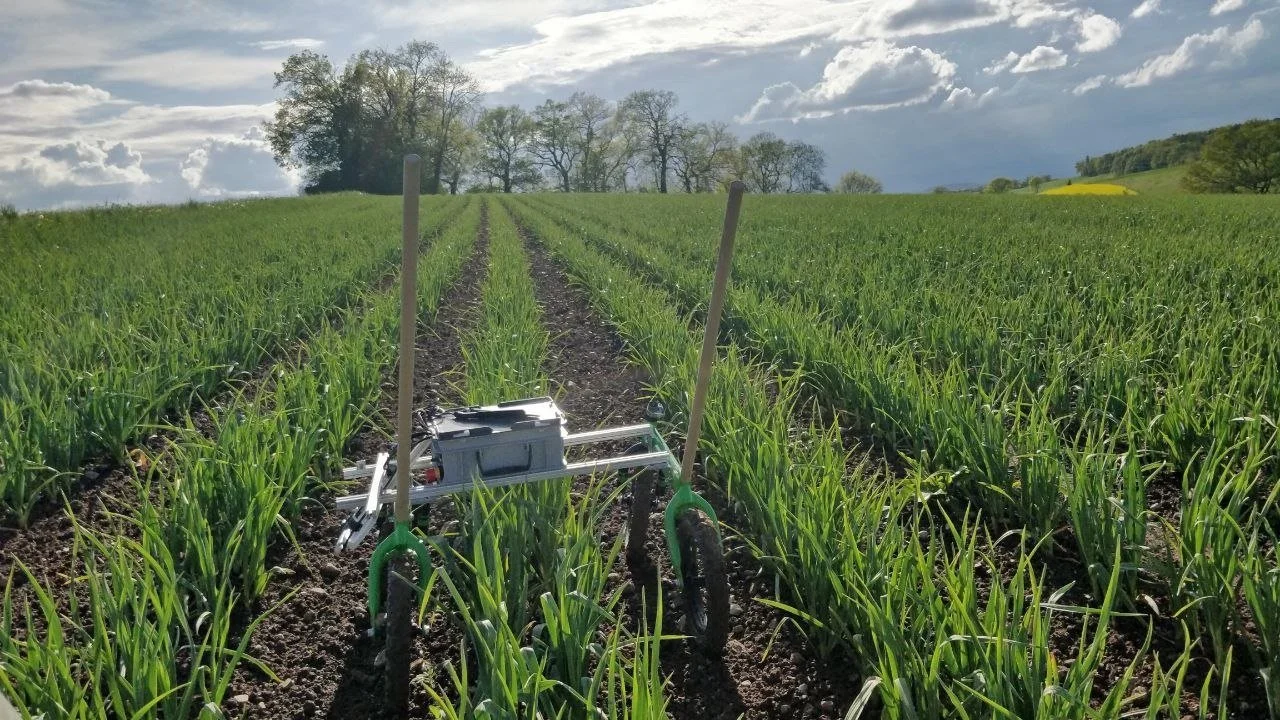
The first steps were taken together with Agroscope using a simple experimental setup: a vehicle built with children’s bicycle wheels, a 4G connection, and a camera for crop detection.
With this setup, we carried out early data collection and initial laser weeding trials using a 5W laser. The results showed the effectiveness of laser treatment, especially when applied at the right growth stage and with sufficient treatment frequency, where fields could potentially be kept nearly completely clean.
These findings were later presented at the Unkrauttagung in Braunschweig, marking an important milestone in validating the approach.
Beta (2022)
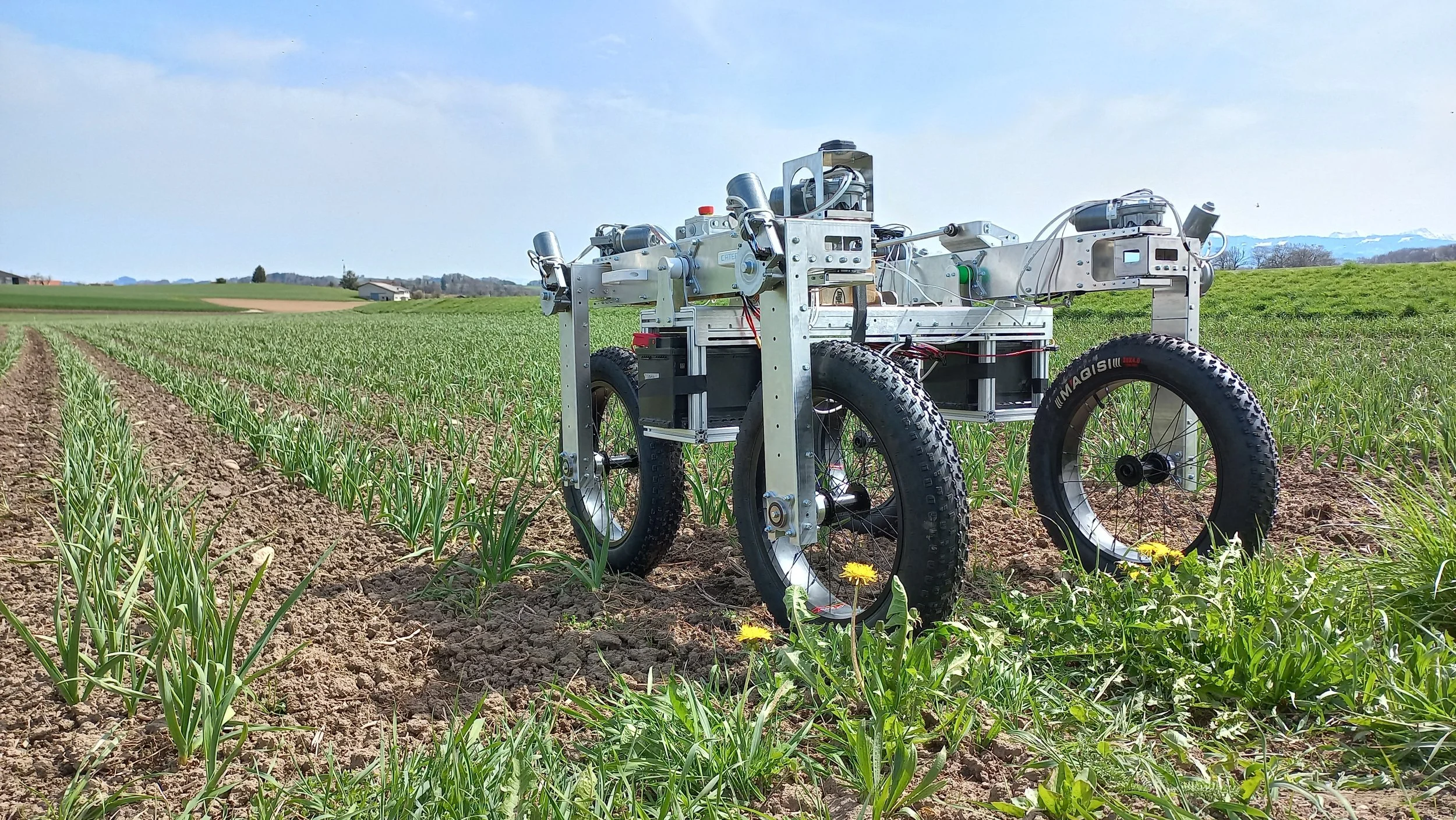
The next generation robot was built in six units and deployed across different farmers’ fields to collect large-scale crop data under real operational conditions. It featured a robust drivetrain with four driving and four steering motors, enabling high maneuverability in complex field environments.
Alongside extensive data collection, we also conducted early laser weeding experiments. This phase ran in parallel with the ETH Pioneer Fellowship, during which the team grew to two full-time employees and significantly accelerated development and field validation.
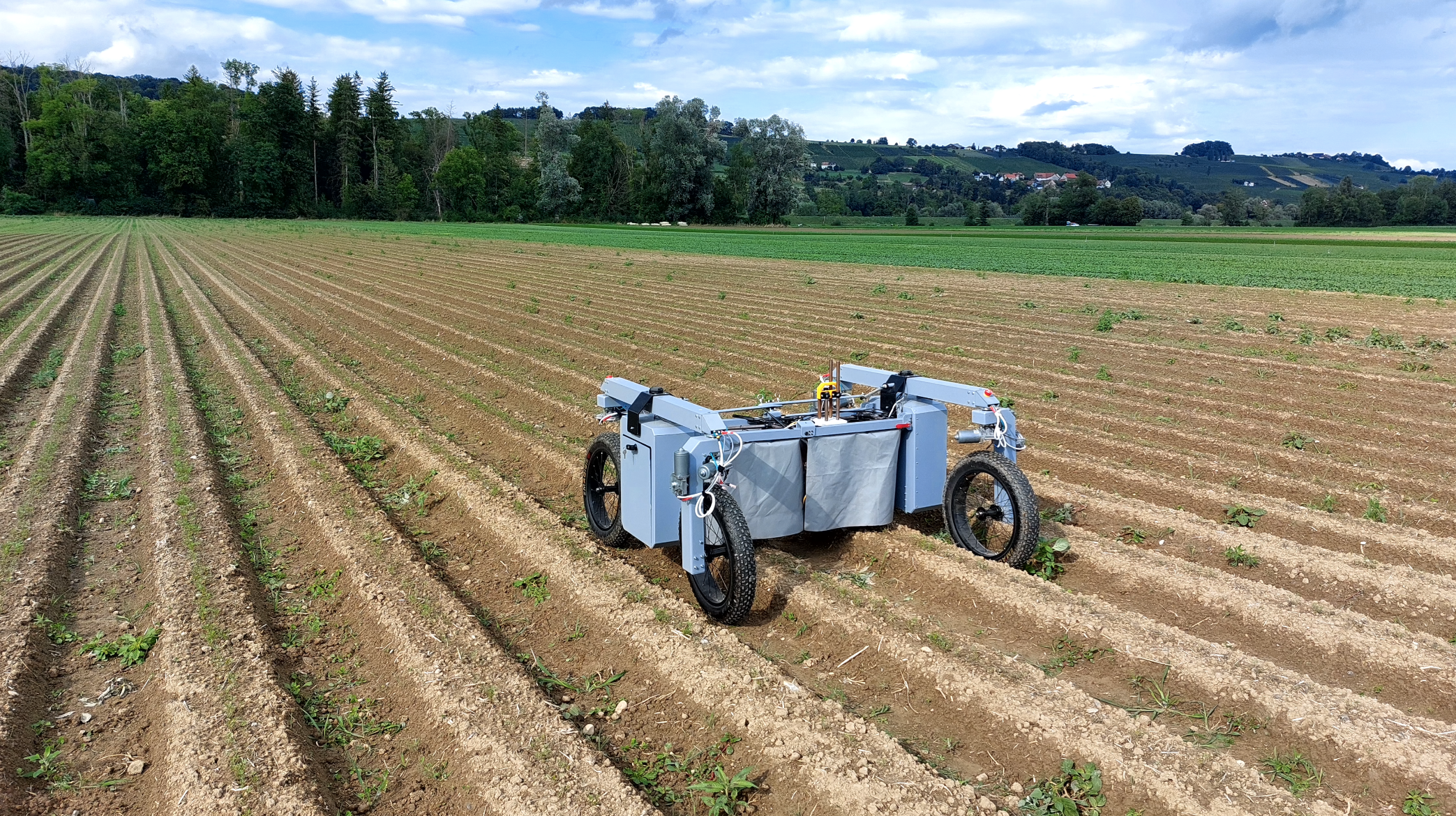
Dragonfly (2023)
The Dragonfly was built as a single fully integrated system and marked the first time a real laser module ran together with live detection and targeting models on board.
Perception, decision making, and laser actuation were combined in one machine, enabling fully automated weed detection and treatment directly in the field.
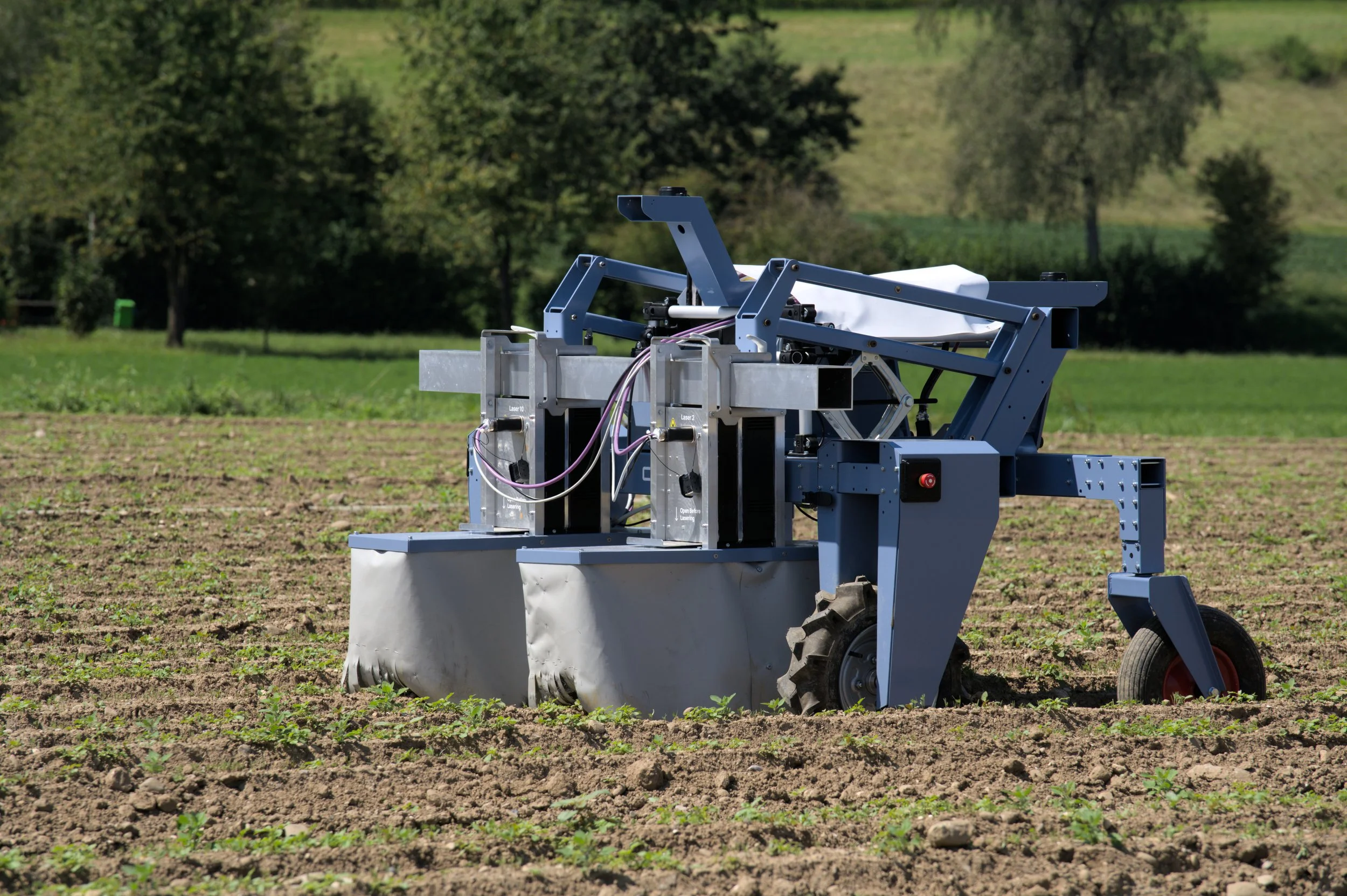
Firefly (2024)
Firefly was built in a fleet of six robots, each equipped with two laser modules for increased weeding capacity. Steering was simplified from individual wheel control to a differential drive system with two motors, using velocity differences for navigation.
These robots were the first in our development to operate at night, significantly expanding usable field time. However, robustness in challenging field conditions remained a key engineering challenge at this stage.
Grasshopper (2025)
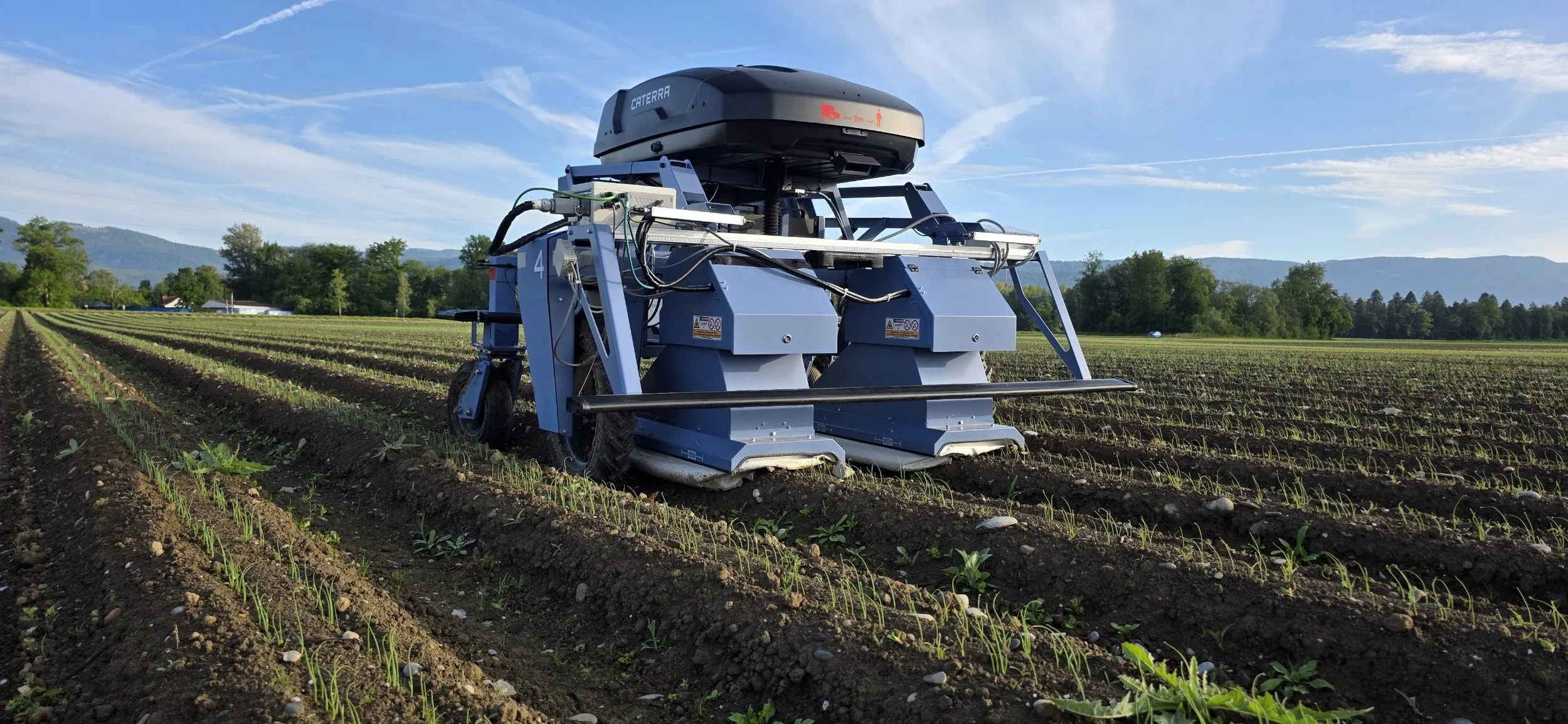
The Grasshopper robots were our first product deployed commercially across Switzerland, from Lake Geneva to Lake Constance. Built in small fleets, they featured 2–3 lasers, a lightweight 450 kg design, and up to 24 hours of battery runtime.
They demonstrated that the concept works in real farming conditions and can significantly reduce manual weeding effort. Some farmers even estimated a reduction equivalent to two full-time workers per season.
All Grasshoppers are still active and rented out in 2026. They are ideal for smaller farms with less hectares.
Honeybee (2026)
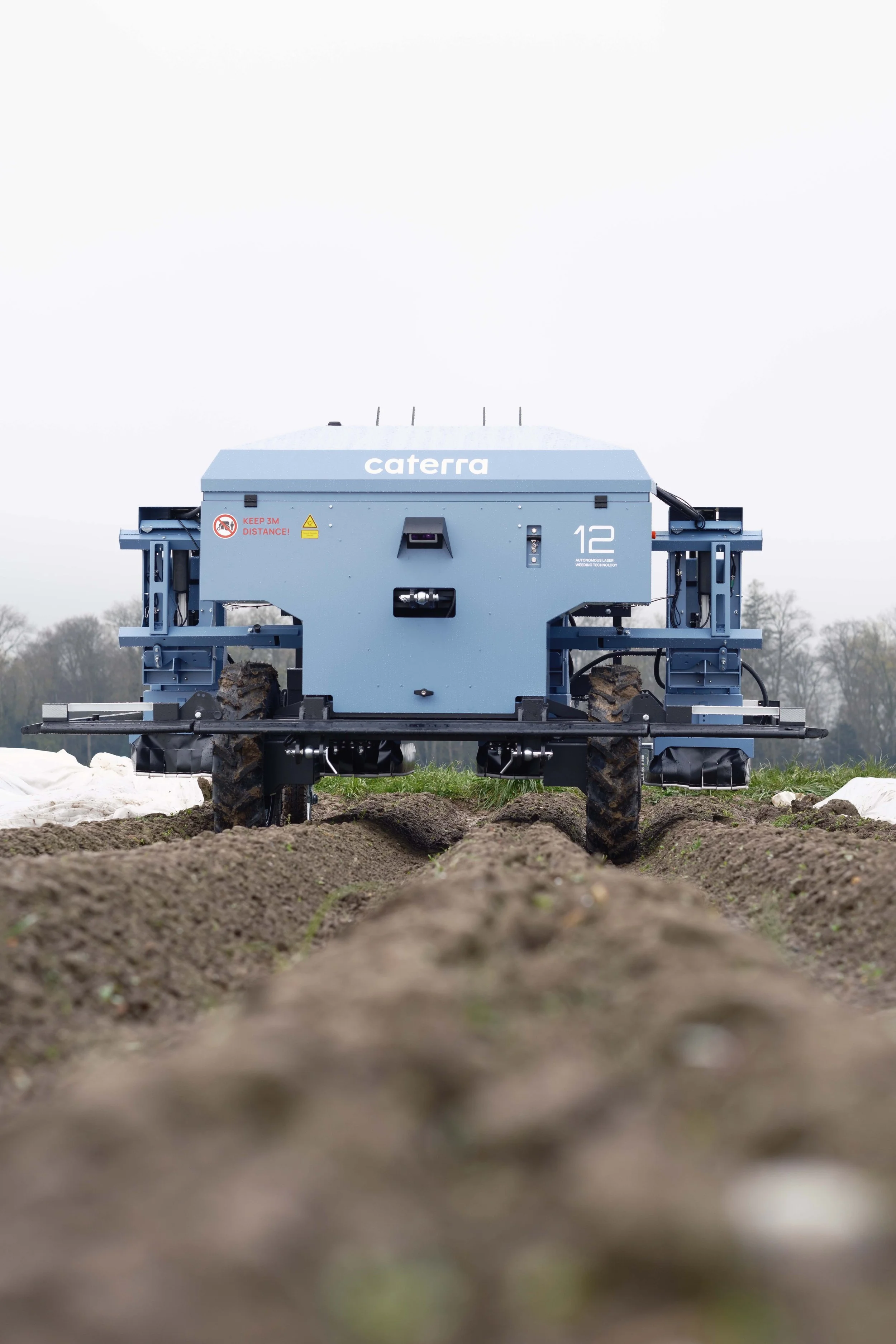
Honeybee is our latest generation product designed for commercial deployment from 2027 onwards. It features stronger lasers than Grasshopper and is equipped with 4–5 laser units, enabling efficient weeding of complete plant beds.
Field tests have shown significantly improved throughput while maintaining 24 hour operational capability. Driving within tractor tracks further increases robustness in real-world conditions, ensuring stable performance even in challenging fields.