
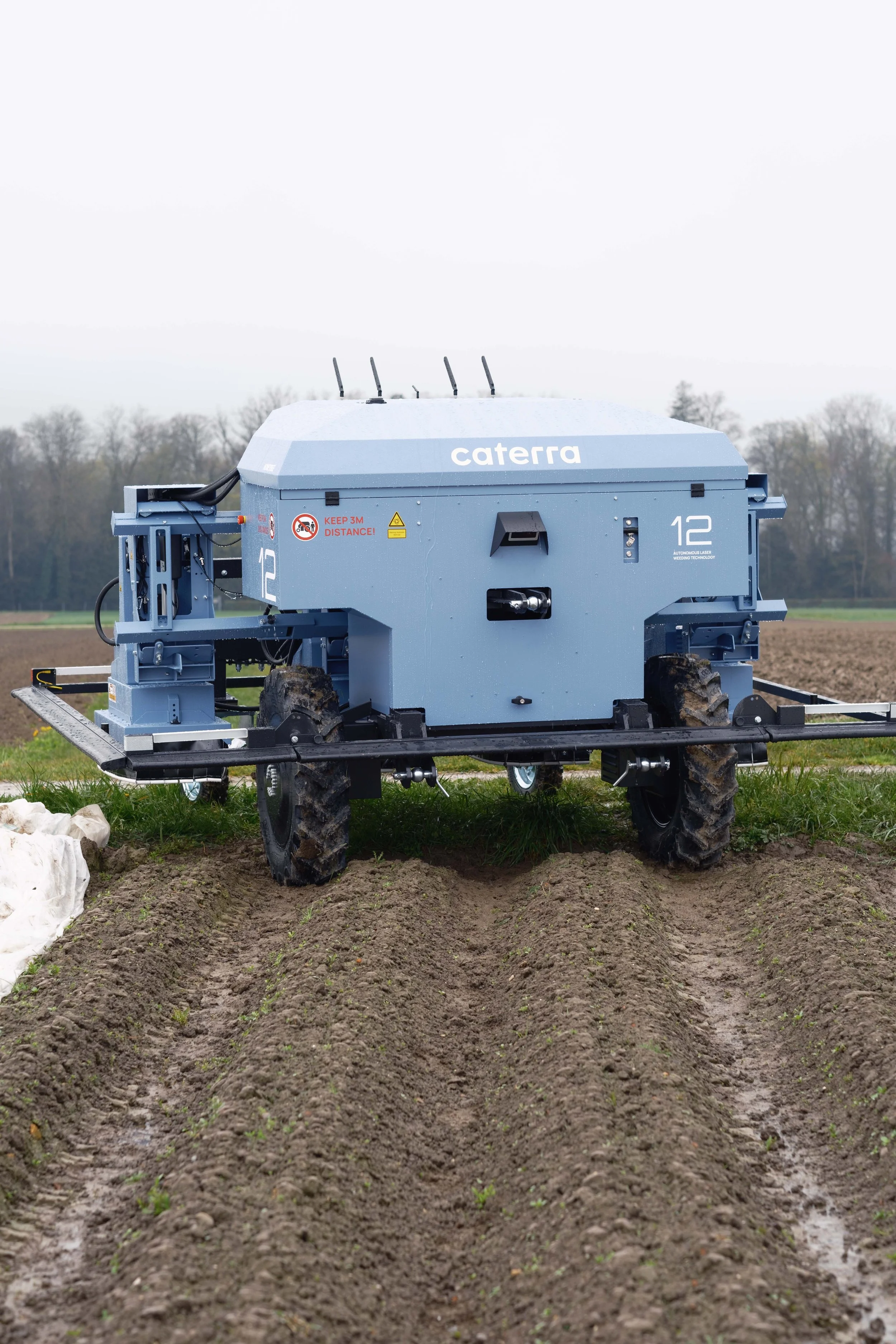
Meet Honeybee
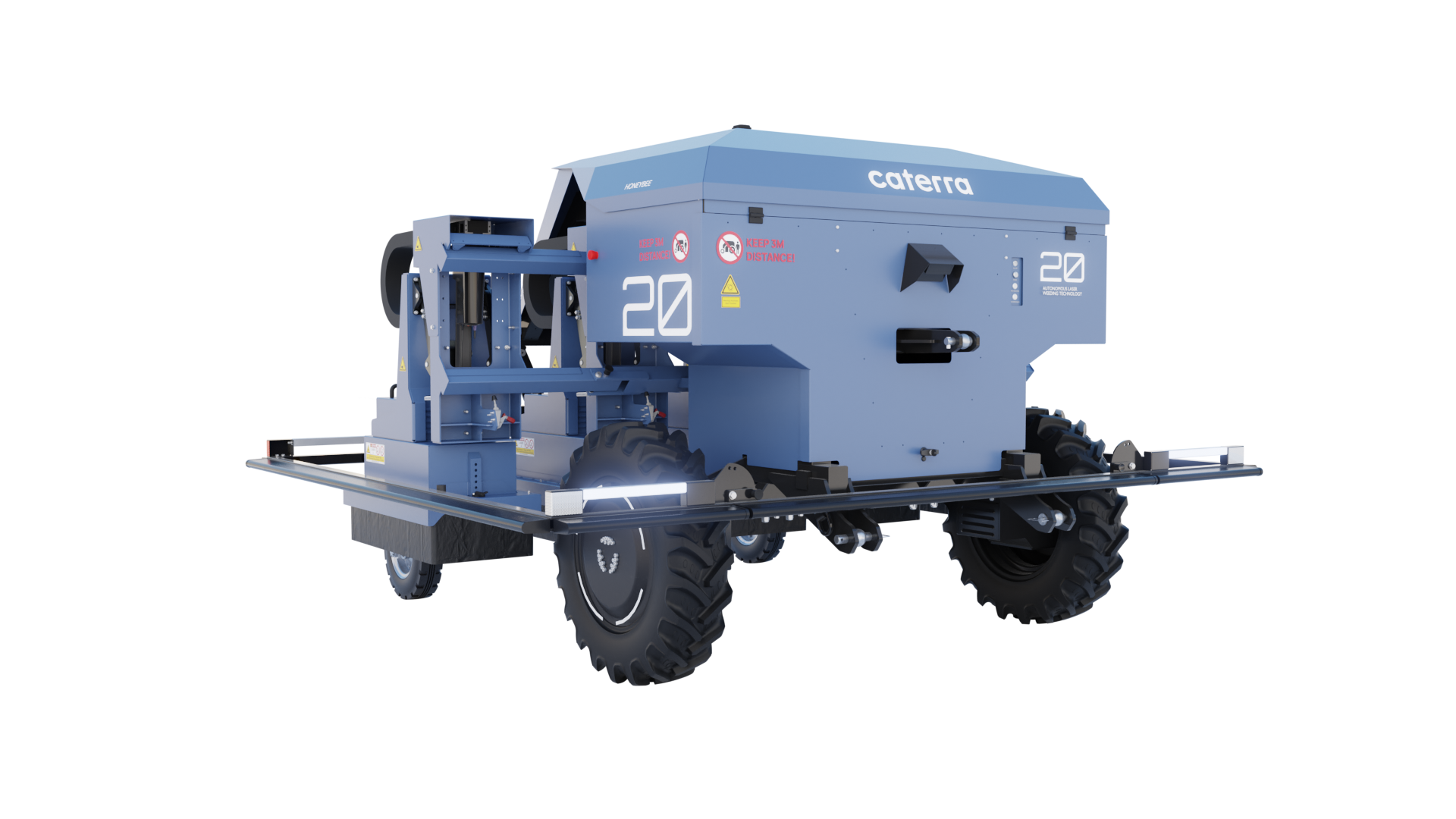
Our newest robot, Honeybee, entered the field in March 2026. With 9 units already working in real conditions, Honeybee is moving from validation to scale.
Orders for the 2027 season are now open.
The specs
-
Changing the track width requires two operators and ideally a tractor to lift the robot. It can be done in 15 minutes.
Every track width between 1.5m and 1.8m can be chosen.
-
Each laser has a motor changing the tool height to the ideal distance to the soil. This is fully automatic ensuring safe and precise treatment without damaging the crops.
-
The robot can operate in both bed and dam cultivation systems. Switching between configurations takes approximately 15 minutes and can be done by a single operator in the field.
Dam configuration
Each module works independently, allowing precise in-row weeding on narrow ridges.Working width per module: 30 cm
Total protected width per module (including protective curtains): 42 cm
Bed configuration
Modules are combined to treat wider crop beds as a single unit. A shared protective curtain covers all 4–5 modules.Working width: 1.2–1.5 m, depending on module configuration
-
The robot can support up to 5 laser modules with 160W each. The recommended amount is defined by your field specifications.
-
The working width depends on the field setup. In dam configuration with 75 cm distance between the crop rows (for example carrots) we can treat 4 dams simultaneously. This allows us to treat an effective area of 3 meter.
In beds, the rows are closer together and the working width is smaller. For example, in an onion bed with 4 double crops rows we use one laser per double row. In this case, the working width would be 1.8m. -
One battery set provides more than 24 hours of operation, depending on conditions such as temperature and workload.
Most customers use a second battery set to enable continuous operation. Swapping batteries takes approximately 5 minutes.
While the robot is working in the field, the second battery set can be charged at the farm. Many users integrate charging with on-farm solar power systems where available.
-
Depending on crop size, weed density, and weed growth stage, we achieve 70–95% weed removal efficiency. With a 3 m treatment width, system throughput ranges from 0.3 to 0.8 ha/day, with an average of approximately 0.5 ha/day. Performance is strongly dependent on weed pressure and weed size. All laser-based systems are most effective when targeting small, early-stage weeds.
Available crops

Carrot

Red beet

Onion

Chicory

Spinach
Coming soon
Baby leaf lettuce
Black salsify
Parsnip
Garlic
Leek
Celery
Parsley root
Chamomile
Mint
Lavender
Thyme
Sweet corn
To enable reliable laser weeding, the system must first learn each crop in real field conditions. This starts with collecting large amounts of image data using the robot during the relevant weed and crop growth stages.
For each crop, thousands of images are captured across different fields, lighting conditions, and growth variations. These images are annotated to distinguish crop from weed and are used to train and validate the AI models.
Because this process is time intensive and costly, crops are added step by step. With every new crop, the system improves, gradually expanding from selected vegetables and herbs toward full coverage of specialty crops worldwide.
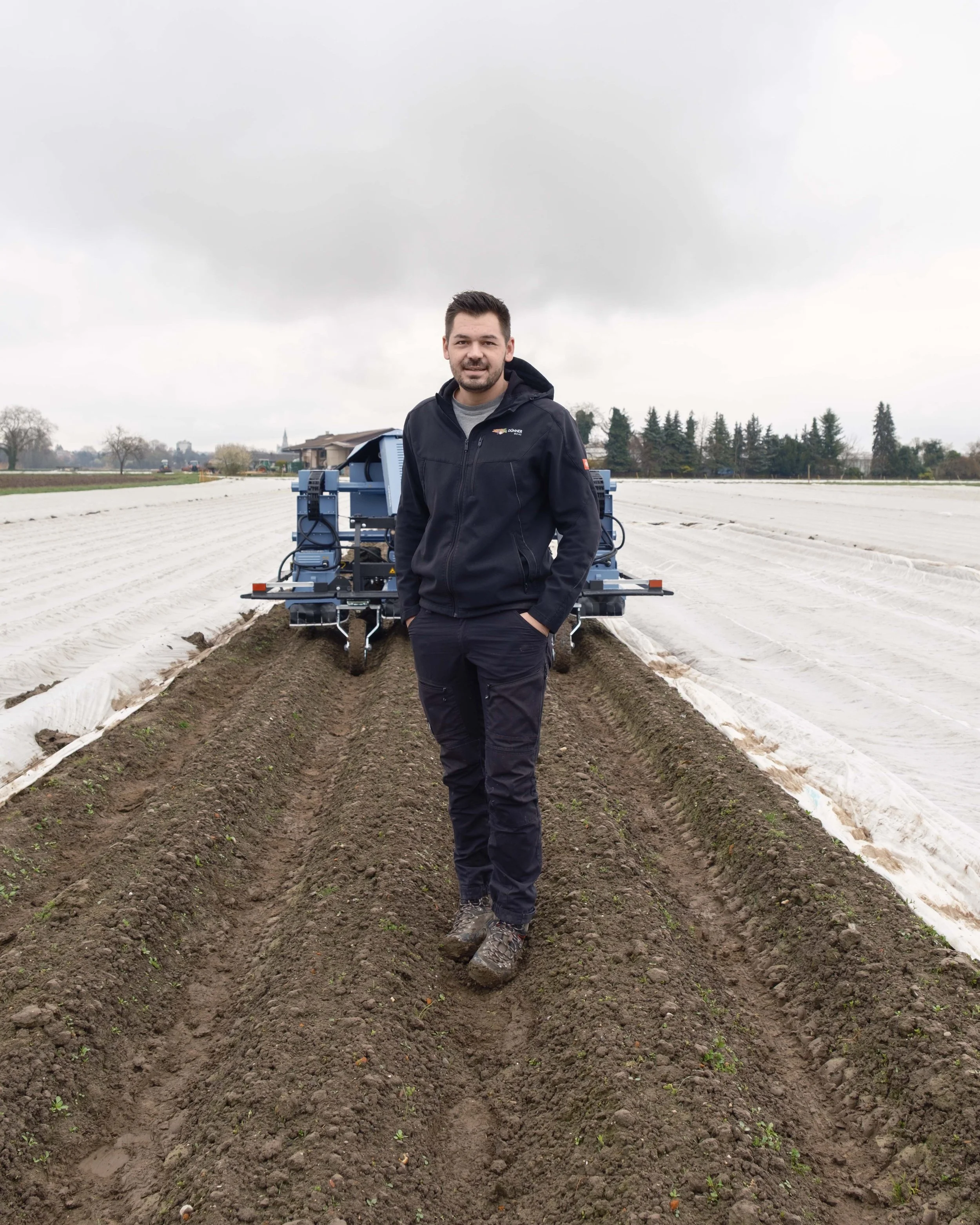
“With the lightweight machine, we can enter the field significantly earlier. At the same time, the soil is less impacted, which has a positive long-term effect on soil structure. Thanks to autonomy, no additional skilled personnel is required.“
Roman Dünner
Owner of Dünner Bio Acker- Und Gemüsebau, SwitzerlandFully autonomous
GPS - RTK
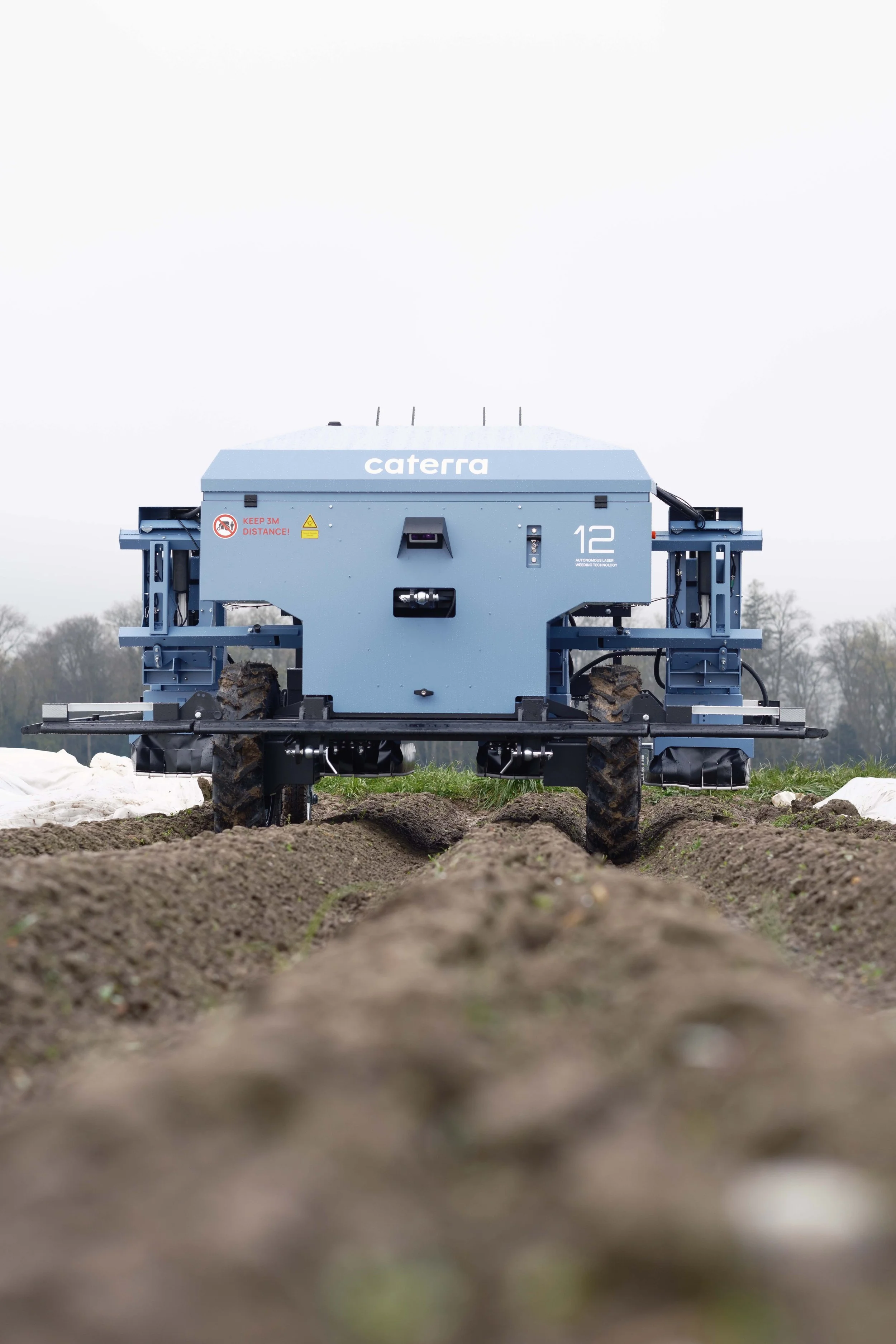
High-precision RTK GPS provides centimeter-level positioning, enabling the robot to follow planned routes accurately across large fields. This ensures stable, repeatable operations even over long distances and varying field layouts.
Camera based navigation
Camera systems allow the robot to understand its immediate surroundings in real time. This enables precise local adjustments and reliable navigation in changing crop and field conditions.
AI powered weed detection
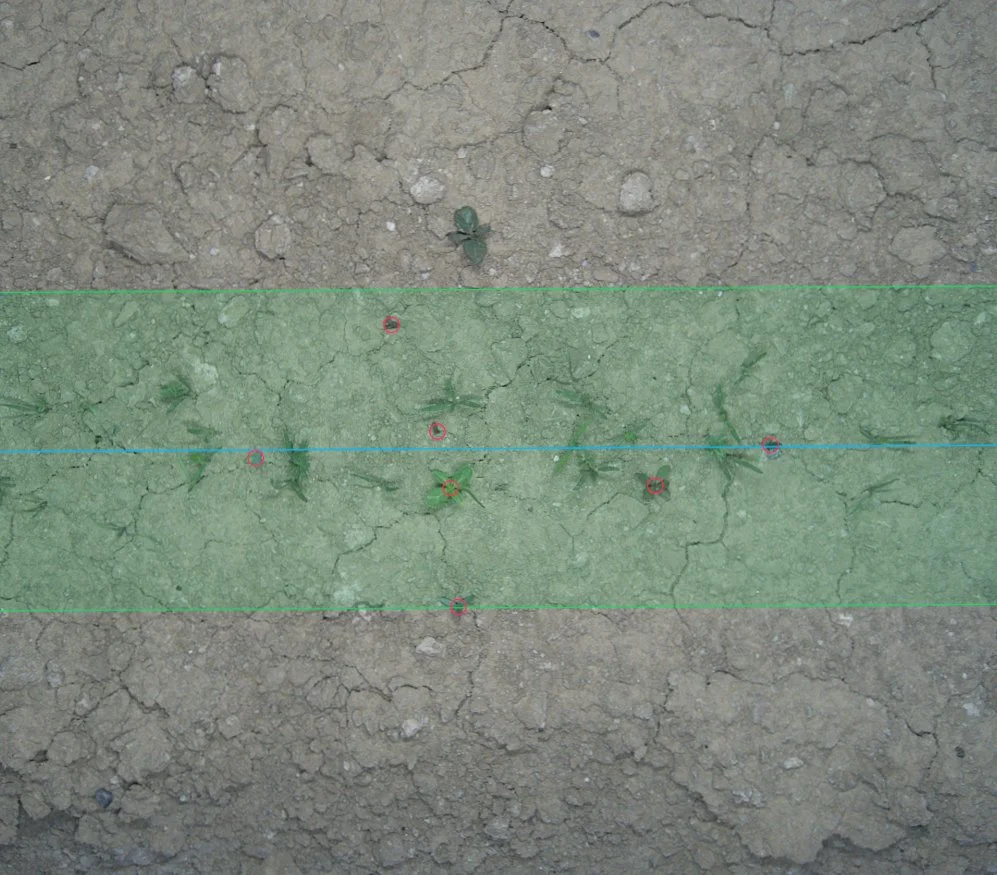
Our AI identifies weeds in real time based on camera data and learned field patterns. It works in combination with crop row detection to precisely separate crops from unwanted plants.
Adjustable crop band
for maximal performance
The operator defines a flexible band around each crop row where laser weeding is applied. Inside the band weeds are treated precisely, while outside the band the system switches to mechanical control for efficient field coverage.
Intelligent web control for autonomous farming
Full control over your robot,
wherever you are
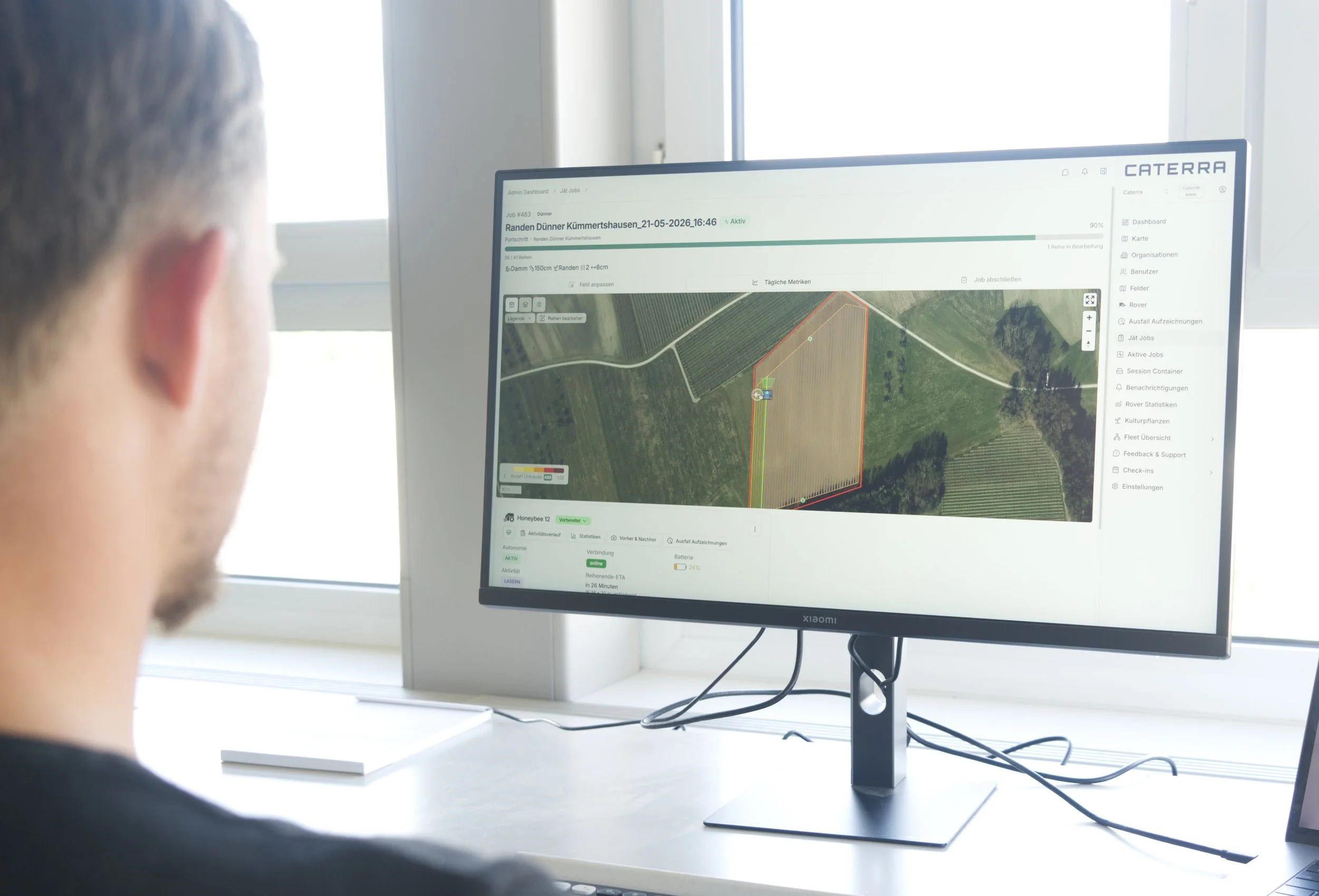
The Caterra web app puts you in the operator’s seat of your autonomous field robot. From one clear interface, you plan missions, check on progress of the operations, and adapt weeding quality in real time.Without ever going into the field.
You always know what’s happening: live status, precise location, and task progress are continuously updated so you can react immediately when conditions change. Whether it’s adjusting the field boundaries, changing laser duration or excluding certain type of weeds.
See the system in action on real fields and understand how autonomous laser weeding can fit into your operation. A demo gives you a clear view of the robot, the web app, and the full workflow from planning to execution.
Get in touch to schedule a personalized demonstration tailored to your crops and farm setup.